
Do Energy Efficient Upgrades Add Value When You Sell? Here's What the Data Says

When clients are weighing up solar or double glazing, the question I hear most is whether they'll ever see that money again. The bills argument is easy to follow. The resale argument has always been harder to prove.
Domain's Sustainability in Property 2025 report finally puts numbers on it. Add a green home loan to the picture and the same upgrade can pay you back in three places: your energy bills, your mortgage repayments and the price you eventually sell for.
What the sale data shows
In 2025, houses with energy efficient features in the listing sold for 14.5% more than houses without them. That's a difference of $118,000 at the median. For units the gap was 12%, or $75,000.
The premium showed up in every capital city, and it was larger again outside them.
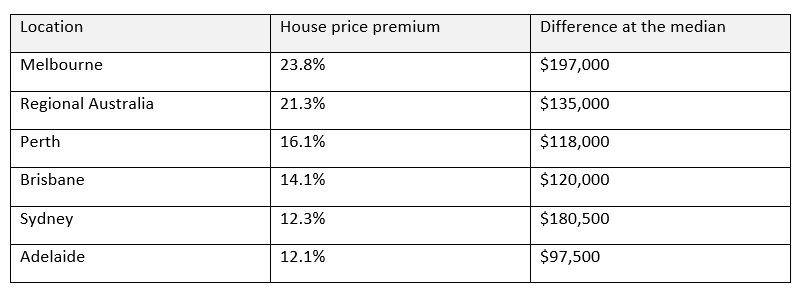
Buyers are also looking harder at these homes. Energy efficient houses drew 13.8% more listing views than other houses, and units drew 6.5% more. Two-thirds of Australian buyers say they would choose an energy efficient home over a comparable standard one.
More than half of all houses sold in 2025 (52.2%) mentioned an energy efficient feature, up from 43.7% in 2020. As that share grows, the home without any of these features starts to look like the odd one out.
One upgrade, three returns
The sale price gets the headlines, but it's the last of the three returns to arrive. The other two start as soon as the work is done.
1. Lower energy bills
Most people already understand this one. The savings show up on every bill for as long as you own the home, and they grow each time energy prices rise.
2. A lower rate on your mortgage
A lot of homeowners don't know about this one. A green home loan is an ordinary home loan with a discounted rate for a home that meets the lender's energy efficiency criteria. There are two ways to qualify.
The first is an Energy Rating. That means a NatHERS certificate for a new build, or a Home Energy Rating for an existing home, at or above the star level the lender sets.
The second is Specific Features. Some lenders will qualify a home on the upgrades themselves, such as solar, heat pump hot water, double glazing or EV charging, without a whole-of-home rating.
To give a sense of scale, a 0.30% discount on an $850,000 loan over 30 years is roughly $163 a month. That's about $1,950 a year, or around $58,600 over the life of the loan. That example assumes a 6.00% rate before the discount, with the discount in place for the full term. Actual rates and discounts differ between lenders and over time.
In many cases the upgrade itself can be funded through the home loan, at a home loan rate instead of a personal loan rate.
3. A better price when you sell
This is the return Domain measured. More buyers look at the listing and the median sale price is higher. The first two returns arrive every month you live in the home, and this one arrives when you sell.
"The upgrades that make a home cheaper to run are the same ones that help it sell for more, and the right lender will discount your rate for them too."
If you're building or renovating
The same three returns apply to a new build or a major renovation, and the cheapest time to lock them in is at design stage. Insulation, glazing and an all-electric fit-out cost far less on the plans than as a retrofit.
Most states now require new homes to reach 7 stars under NatHERS. Domain's report cites the step from 6 to 7 stars as worth around $450 a year in heating and cooling savings on average.
You're already paying for a NatHERS assessment to get your build approved. That same certificate can be your evidence for a green construction loan, so it's worth asking your designer what it would take to go a little beyond the minimum. Some lenders set their threshold above it.
For established homes the opportunity is bigger still. More than 70% of Australian homes were built before 2003, well before today's energy standards. If you're renovating one of them, you're improving a home that most of the street hasn't touched yet.
Where to start
Most people I speak with are closer to a green loan than they expect. Some already qualify on what they installed years ago. Others are one upgrade away, and it helps to know which one before you sign a quote.
If you're planning an upgrade, a renovation or a build, tell me what you have in mind. I can tell you which pathway fits and what the saving on your repayments would look like.
This article contains general information only and does not constitute personal financial or credit advice. Sale price and listing figures are drawn from Domain's Sustainability in Property 2025 report. They describe differences in median prices and are not a guaranteed return on any upgrade. The repayment example is illustrative only. Lender eligibility criteria, green loan discounts and product availability are subject to change. Marisa Hoffenberg is a Credit Representative (No. 537544) of Australian Credit Licence No. 393195. Please consider your own circumstances and seek independent advice before making any financial decisions.